
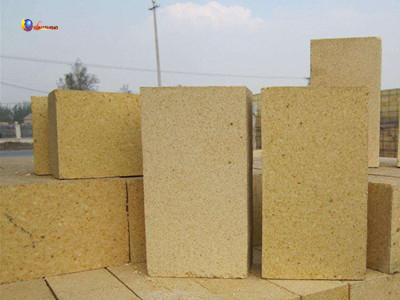
When choosing refractory bricks for industrial furnaces and kilns, high alumina bricks and fireclay bricks are two common options. Although both are aluminosilicate refractory materials, they have different compositions, performance characteristics, and applications.
Understanding the difference between high alumina bricks and fireclay bricks can help you select the right refractory material for your furnace.
What Are High Alumina Bricks?
High alumina bricks are refractory bricks with a relatively high Al₂O₃ (alumina) content. They are designed for demanding high-temperature applications where good refractoriness, mechanical strength, and resistance to chemical attack are required.
High alumina bricks are commonly used in:
Steelmaking furnaces
Cement kilns
Industrial furnaces
Heat treatment furnaces
Ceramic kilns
Non-ferrous metal furnaces
Compared with standard fireclay bricks, high alumina bricks generally offer better high-temperature performance and are suitable for more demanding operating conditions.
What Are Fireclay Bricks?
Fireclay bricks are traditional aluminosilicate refractory bricks mainly made from fireclay and other aluminosilicate raw materials.
They are widely used because they provide a good balance of performance and cost.
Typical applications include:
Boilers
Chimneys
Incinerators
Industrial furnaces
Ceramic kilns
General heating equipment
Fireclay bricks are a practical choice for applications where the temperature and chemical conditions are not extremely severe.
High Alumina Bricks vs Fireclay Bricks
| Property | High Alumina Bricks | Fireclay Bricks |
| Alumina Content | Higher | Lower |
| Refractoriness | Higher | Moderate to high |
| High-Temperature Strength | Generally higher | Generally lower |
| Chemical Resistance | Better in many aggressive environments | Suitable for moderate conditions |
| Cost | Higher | More economical |
| Typical Use | Demanding industrial applications | General-purpose applications |
The actual performance of each product depends on its specific grade, raw materials, manufacturing process, and operating conditions.
Which One Should You Choose?
Choose high alumina bricks when your application requires:
Higher operating temperatures
Higher refractoriness
Better high-temperature strength
Greater resistance to chemical attack
Longer service life in demanding conditions
Choose fireclay bricks when:
Operating temperatures are moderate
Chemical attack is limited
Mechanical loads are relatively low
Cost efficiency is important
It is also important to remember that a higher alumina content does not automatically mean a better solution for every application. Refractory selection should consider temperature, furnace atmosphere, chemical corrosion, thermal shock, mechanical load, and expected service life.
Conclusion
The main difference between high alumina bricks and fireclay bricks is their alumina content and overall performance under demanding conditions.
High alumina bricks are generally preferred for high-temperature and more aggressive industrial applications, while fireclay bricks offer a cost-effective solution for many general-purpose furnaces and heating systems.
The best refractory brick is not necessarily the most expensive one. It is the material that matches the actual operating conditions of your furnace and provides the right balance between performance, service life, and cost.
If you need help selecting the right refractory bricks for your furnace or kiln, contact a professional refractory manufacturer with details about your operating temperature, application, brick dimensions, and working environment.

